Vollick House Contact
Collection No. 002 Benchwood Dresser
Made to order

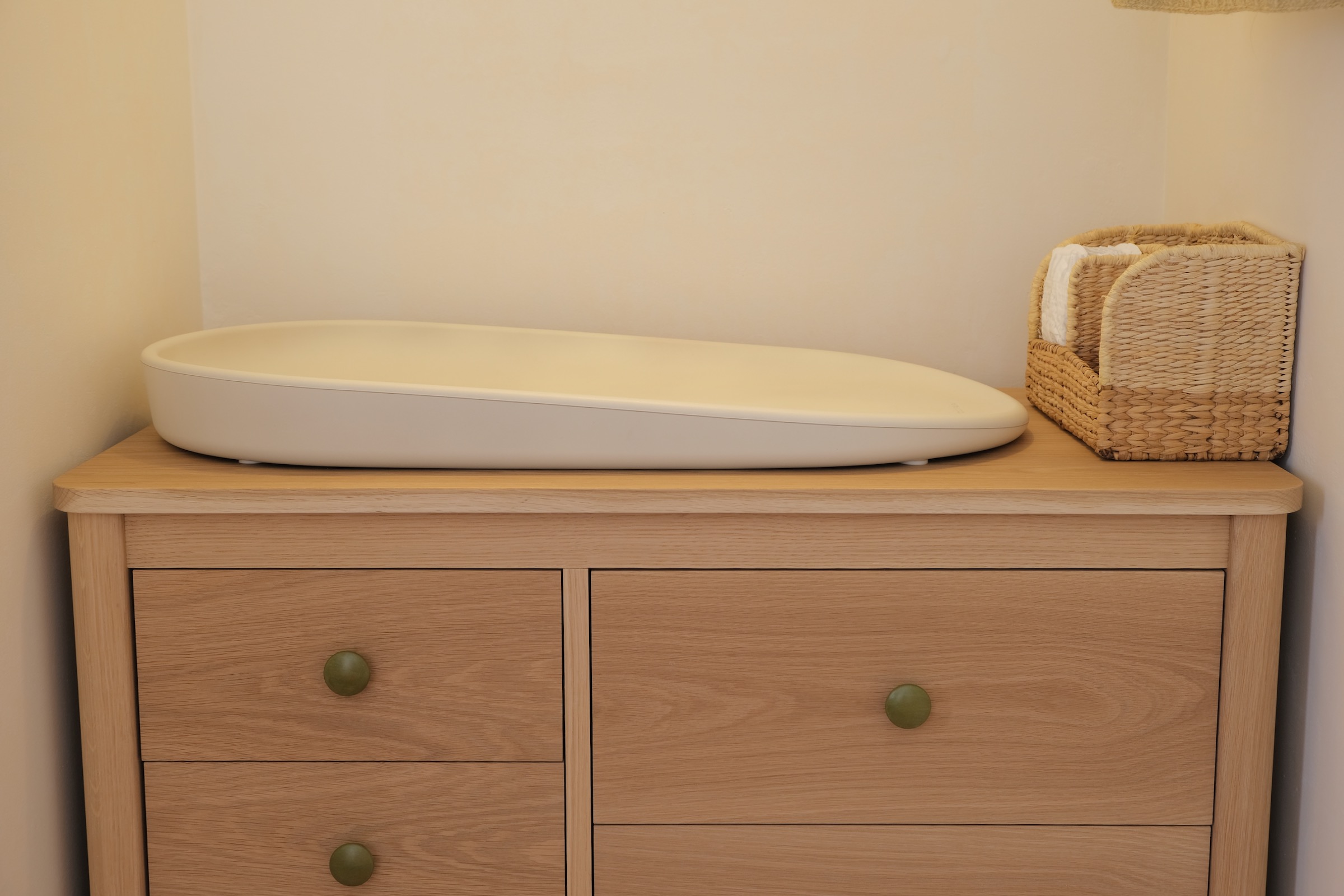
Benchwood Dresser.

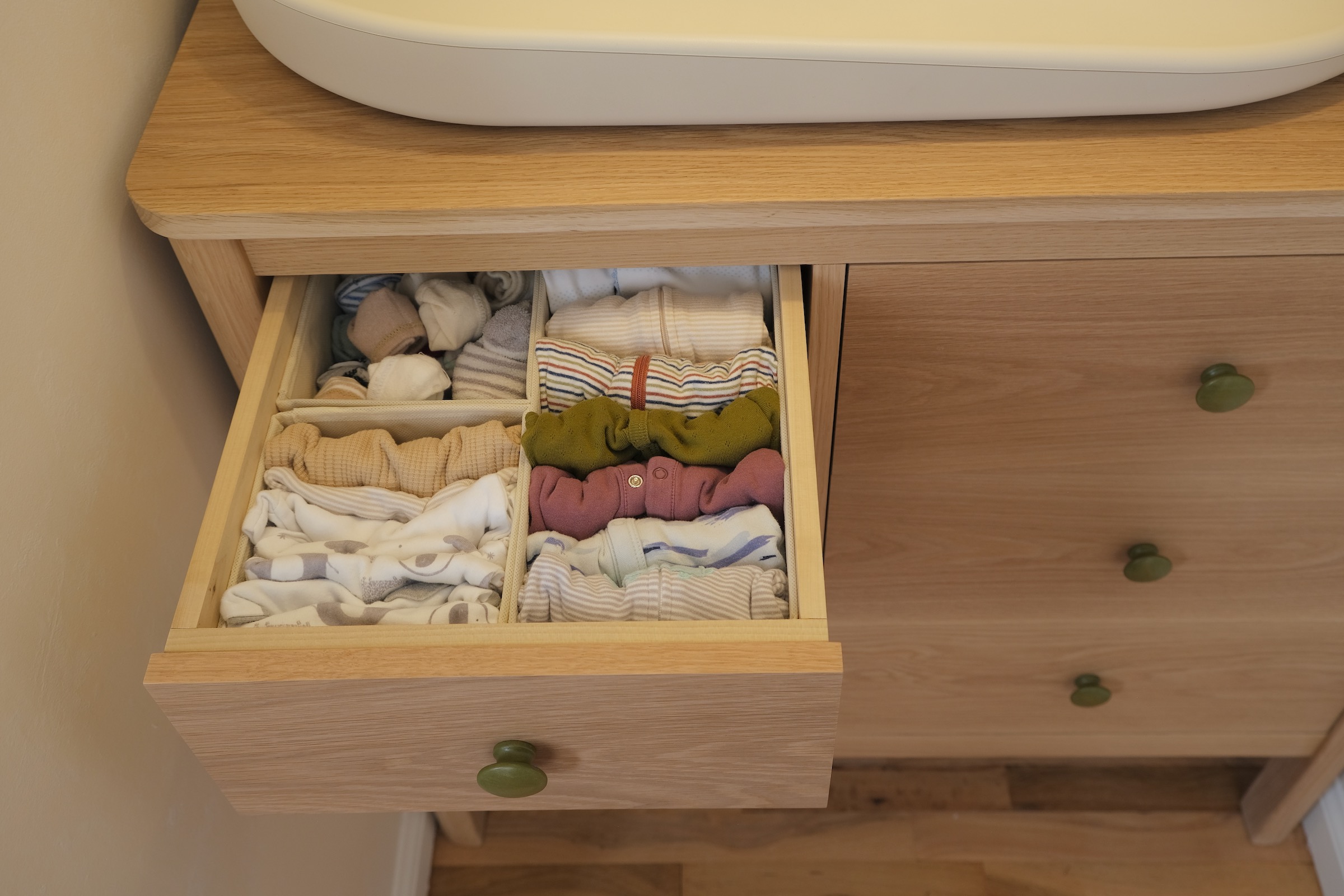
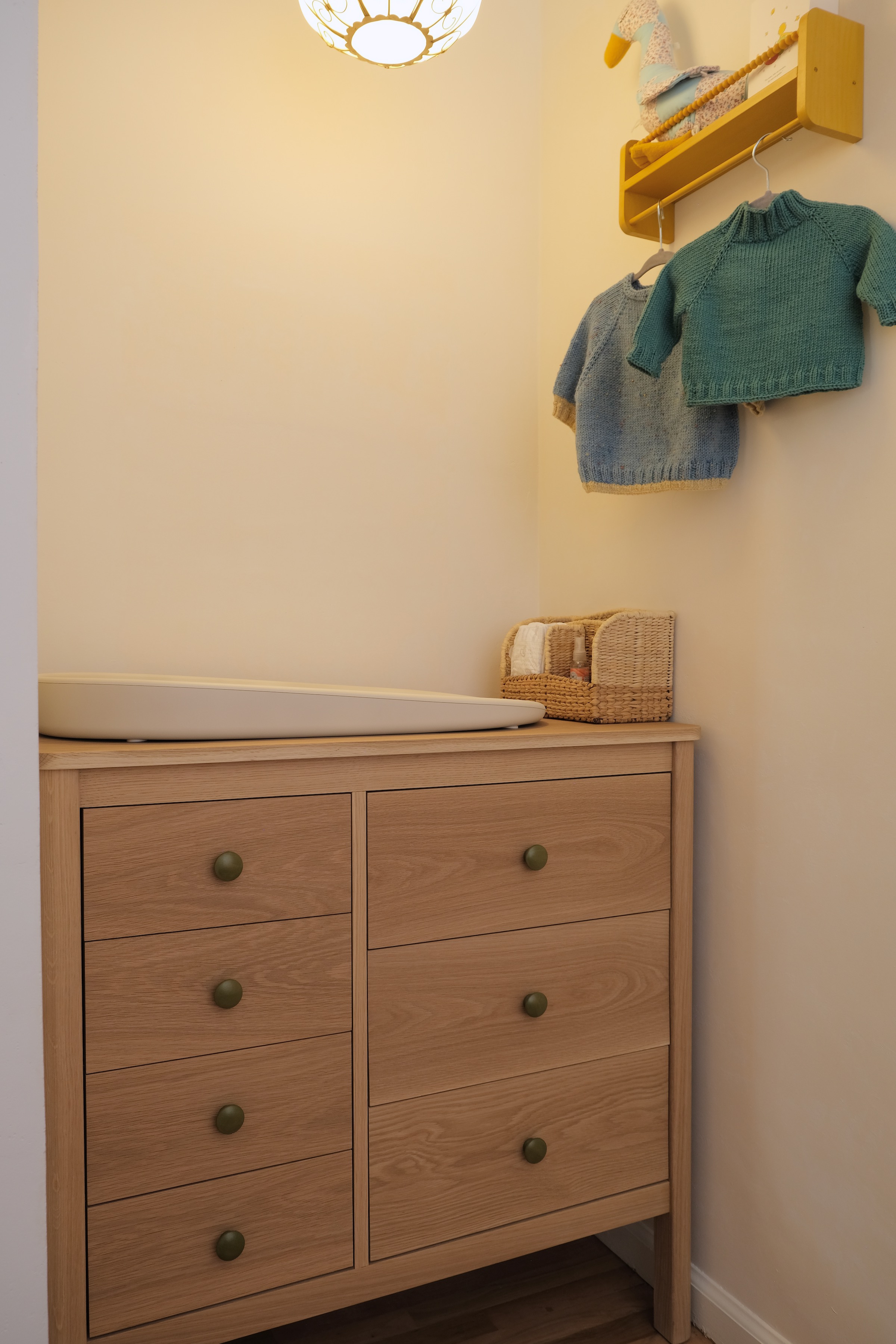
White oak dresser. Multiple drawer configurations available.

Species
Solid white oak
Hardware
Soft-close drawers, hand-painted knobs
Finish
Zero-sheen water-based topcoat
Lead time
8–12 weeks
Starting at $2,800
01 Origin

From the bench it was made on.

A few years ago, Vollick House founder Tyler built a Roubo workbench for the shop. Designed in the 18th century by French cabinet maker André Roubo, this workbench sits at the heart of our shop — most pieces get refined by hand on it before final assembly. Made of solid white oak and steel, it's built to last generations.

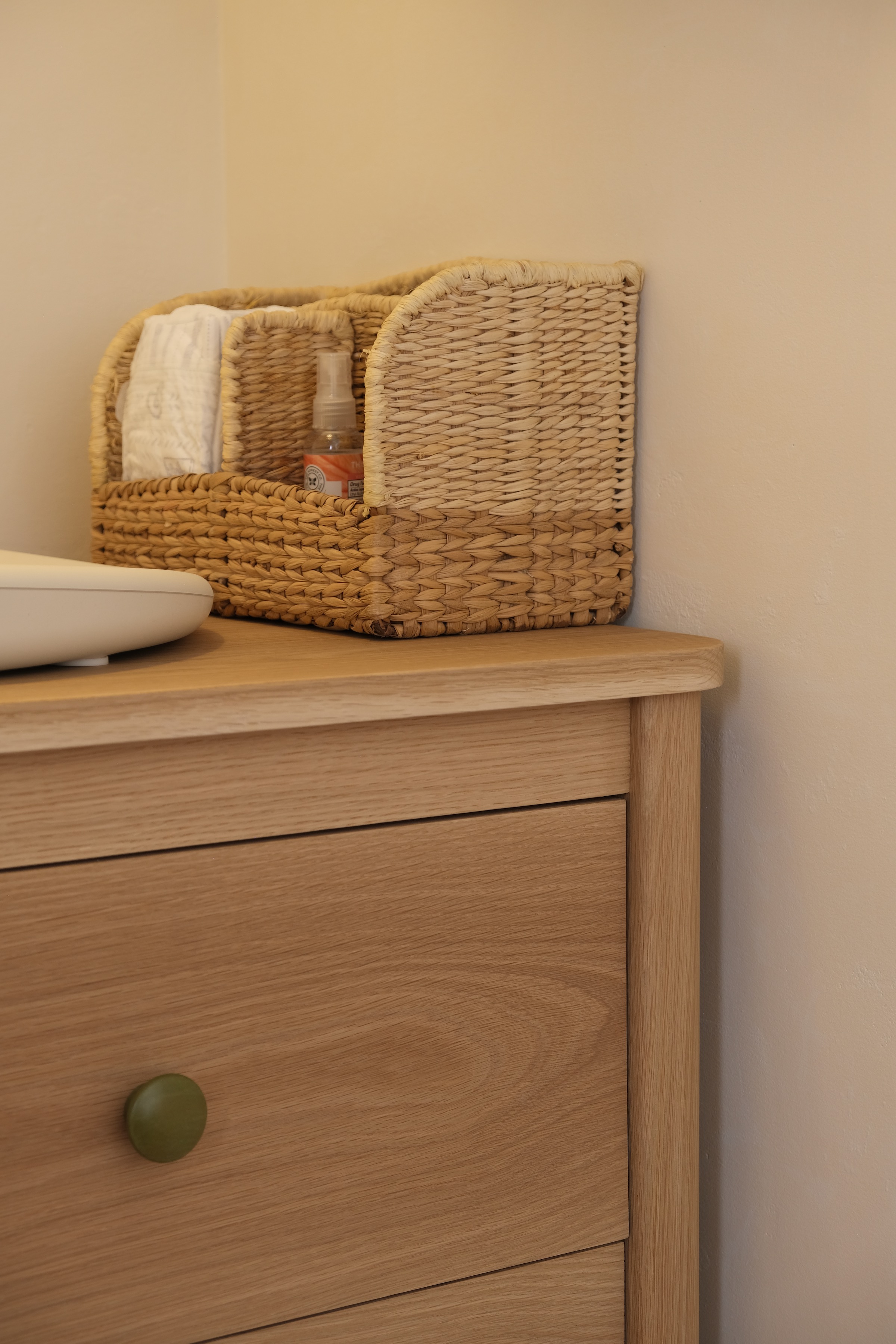
When Tyler and his wife Katie were preparing their nursery for their first baby, they needed a dresser that could double as a changing table. With enough white oak left over from the workbench, Tyler set out to design something that would fit the style of their nursery but also be something that their kids could pententially use when they grew up. With large rounded legs, hand-painted knobs, and a natural finish, the dresser settled right into their nordic-folk-inspired nursery.

Benchwood Dresser detail
02 Method

A method borrowed from ship builders.

The legs of the Benchwood Dresser carry a large round-over that isn't feasible to make with a machine — the radius is simply too large for any router bit. Instead, we turned to a method with roots in wooden shipbuilding: the 5:7 ratio. When mast makers needed to take a square timber to a perfect cylinder, they worked in stages — first to an octagon, then to a sixteen-sided polygon, then smoothed the rest with a drawknife and spokeshave, each step guided by the proportional relationship between the flat and the corner. The geometry does the work.

Applied here to furniture legs rather than mast timber, the method is the same: hand planes to establish the flats, a spokeshave to blend the transitions, careful attention to the grain throughout. The result is a round-over with a quality that machined profiles struggle to replicate — consistent, but not mechanical. While the human eye struggles to realize something like this is made by hand tools, when touched we believe one can sense that these legs were made by hand.

Benchwood Dresser leg detail showing hand-shaped round-over
Benchwood Dresser detail
Inquire

Inquire about the Benchwood Dresser.